natusdir & Data Collection Files
Shared with the CNT
This procedure runs on infrastructure the lab and the CNT operate together. The CNT manual keeps its own copy; changes to the shared steps are agreed with the CNT.
What this page tells you
The pipeline needs three files: channel mapping (see Automated Channel Mapping), natusdir (tells natus2mef where raw files and output mefs go), and data collection (records real Natus start times). Copy natusdir and data collection from the example patient in ieeg_metadata; name them HUPXXX_natusdir, HUPXXX_CCEPS_natusdir, etc.
Prepare these files for each patient before running the EEG processing pipeline. The pipeline needs three files: Channel Mapping, Natusdir, and Data Collection.
These files are:
- Channel Mapping
- See Automated Channel Mapping (Automated Channel Mapping).
- Natusdir
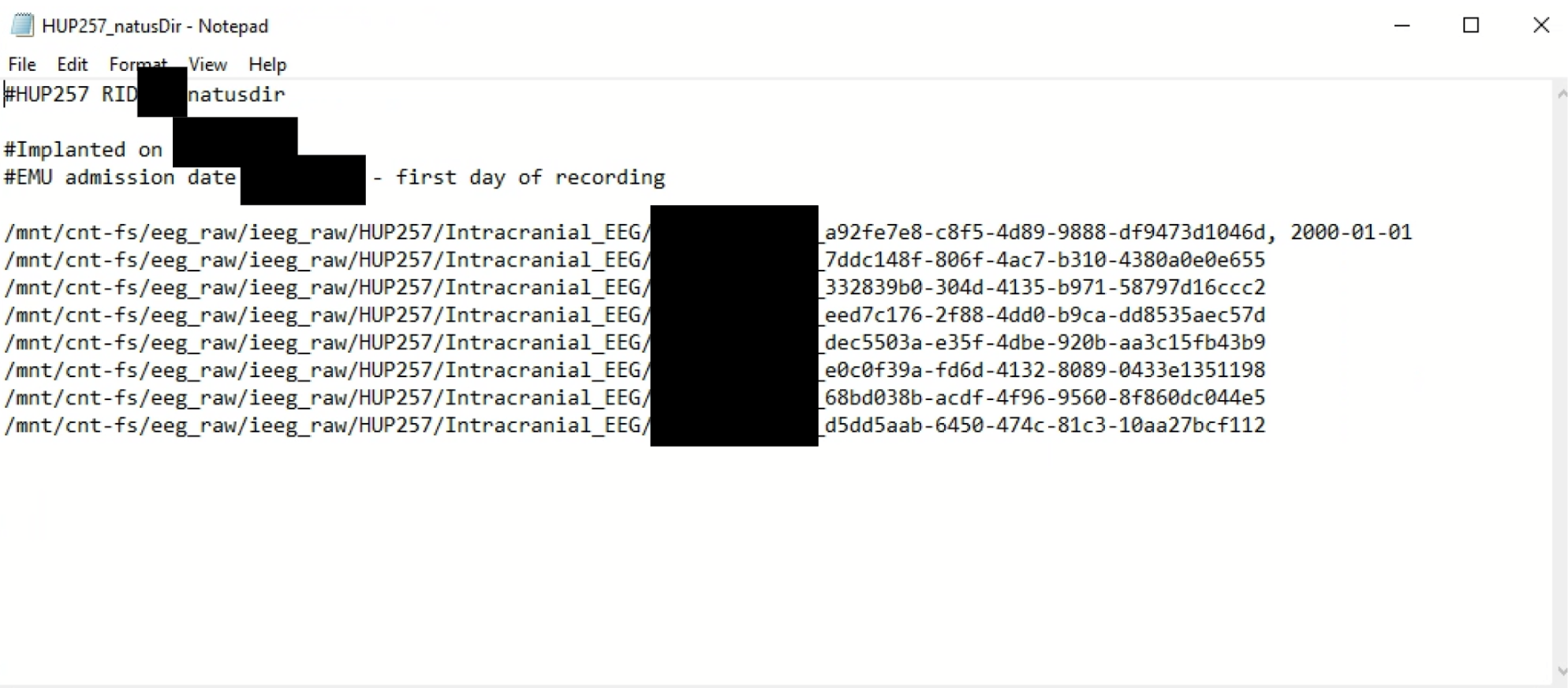
- This file is used to run the Natus to mef conversion. It tells the code where to find the raw Natus EEG files and where to write the mefs.
- Name the Natusdir files as follows:
- HUPXXX_natusdir (for intracranial)
- HUPXXX_CCEPS_natusdir
- HUPXXX_Gottfried_natusdir
- HUPXXX_Gold_natusdir
- Data Collection
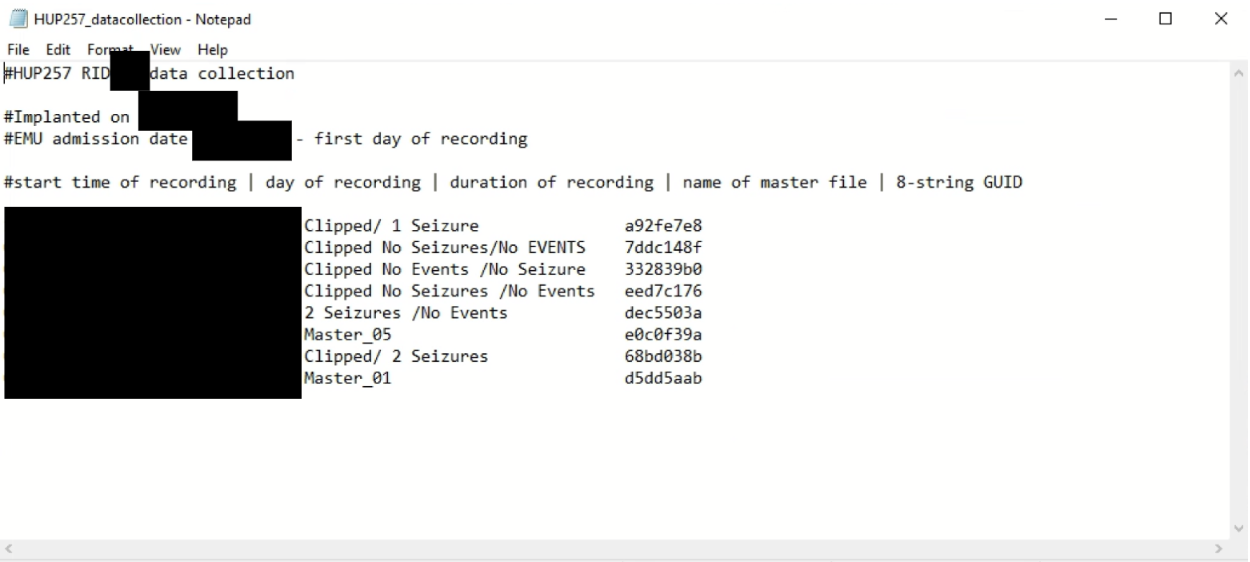
- This file records the real start times, dates, and names of the EEG files in Natus. This record is needed because all dates are shifted to 2000-01-01 when the data are uploaded to ieeg.org.
- Name the data collection files as follows:
- HUPXXX_datacollection (for intracranial)
- HUPXXX_CCEPS_datacollection
- HUPXXX_Gottfried_datacollection
- HUPXXX_Gold_datacollection
For the Natusdir and Data Collection files, copy them from the example patient (in ieeg_metadata) into the HUPXXX folder you are working with (in ieeg_raw). Then change the information inside to match your current patient.
Below is an example natusdir file:
Below is an example data collection file: